Cyber Security Audit: What It Covers and How to Prepare
A cyber security audit checks whether your controls match a recognised standard and actually work. Here is what an audit covers, the types you may face and how to prepare so the result helps rather than surprises you.
Scope of an Audit
The areas auditors test, from governance and access to backups and incident response.
Read SectionChoosing the Right Audit
Internal, external, compliance and technical audits compared.
Read SectionGetting Audit Ready
A practical checklist to collect evidence and close gaps early.
Read SectionA cyber security audit is a structured review that tests your security controls against a standard, a regulation or your own policies. The result is an evidence-based picture of what works, what does not and what to fix first.
Australian organisations face audits for many reasons: a customer questionnaire, an ISO 27001 certification, a regulator or a cyber insurance renewal. Knowing what auditors look for makes each one faster and less stressful.
What a Cyber Security Audit Covers
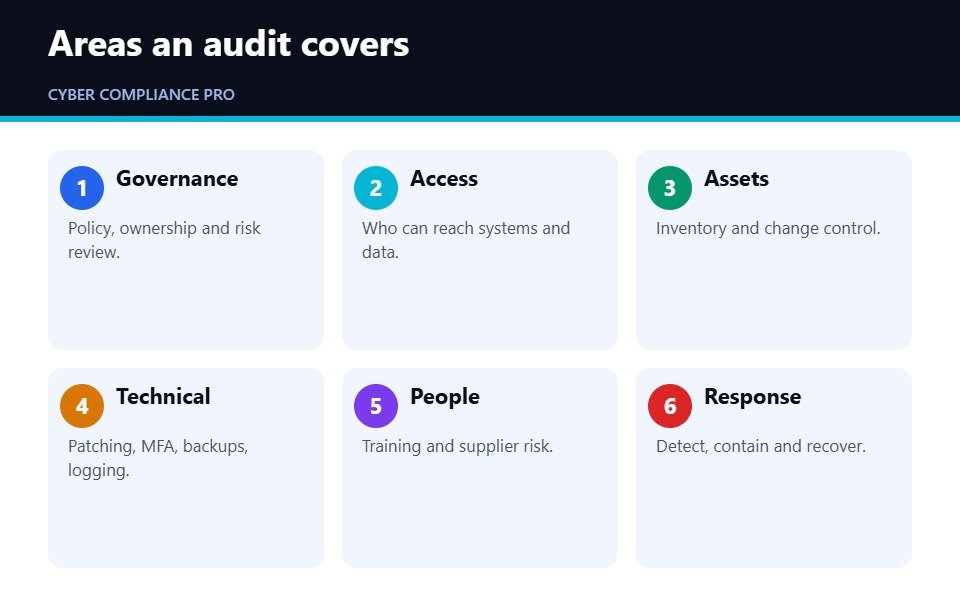
Scope varies, but most audits examine the same core areas.
- Governance and policy: Whether leaders set direction, assign ownership and review risk.
- Access control: Who can reach systems and data, and how that access is approved and removed.
- Asset and change management: Whether you know what you own and how updates are controlled.
- Technical controls: Patching, multi-factor authentication, backups, logging and network protection.
- People and suppliers: Training, onboarding, offboarding and third-party risk.
- Incident response: Whether you can detect, contain and recover from an event.
Auditors look for evidence in every area. A written policy alone is not enough, because they also want proof that it is followed.
Types of Cyber Security Audit
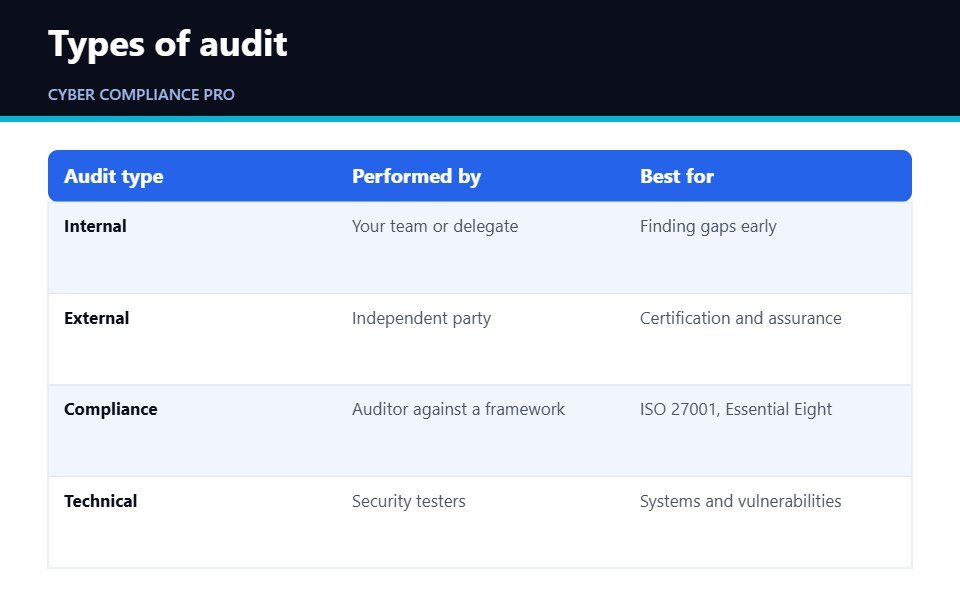
Different audits answer different questions. An internal audit is carried out by your own team or a delegate and helps you find problems early. An external audit is performed by an independent party, often for certification or customer assurance.
A compliance audit measures you against a named framework, such as ISO 27001, the Essential Eight or APRA CPS 234. A technical audit, such as a vulnerability scan or penetration test, tests systems directly. Many organisations combine them, because each shows a different part of the picture.
If you are aiming for certification, our guide on how to run an ISO 27001 internal audit explains the internal step in detail.
The Audit Process From Start to Finish
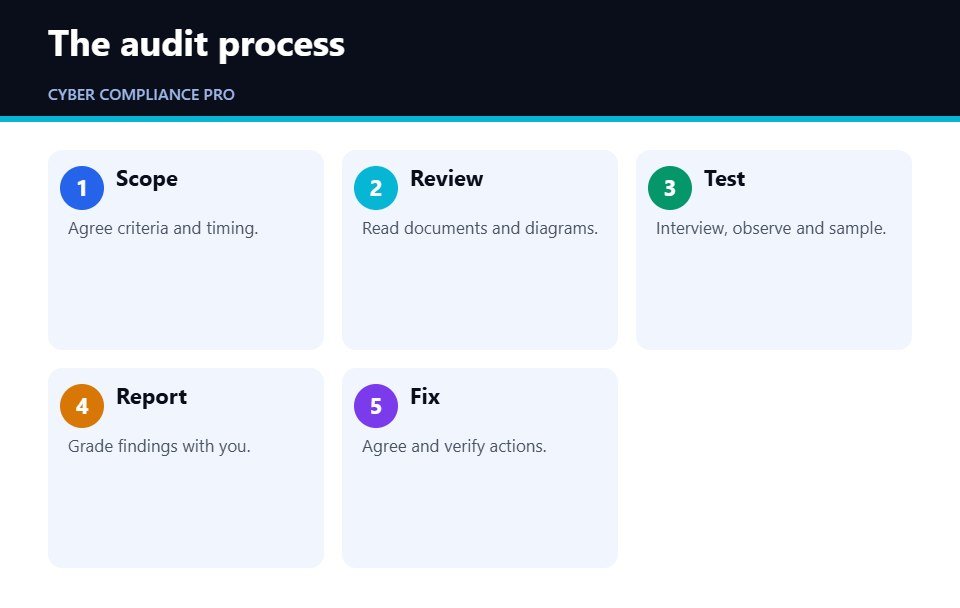
Most audits follow a similar path. First, the auditor and your team agree scope, criteria and timing. Next comes document review, where policies, diagrams and previous reports are examined.
Then the auditor gathers evidence through interviews, observation and sampling of records and system settings. Findings are graded and discussed with you before the report is final. Finally, you agree corrective actions with owners and dates, and the auditor may return to verify them.
Ask for the criteria in writing at the start. It stops disagreement about what "good" means later.
Not sure where to start? A cyber compliance assessment gives you a baseline before an auditor arrives.
How to Prepare for a Cyber Security Audit
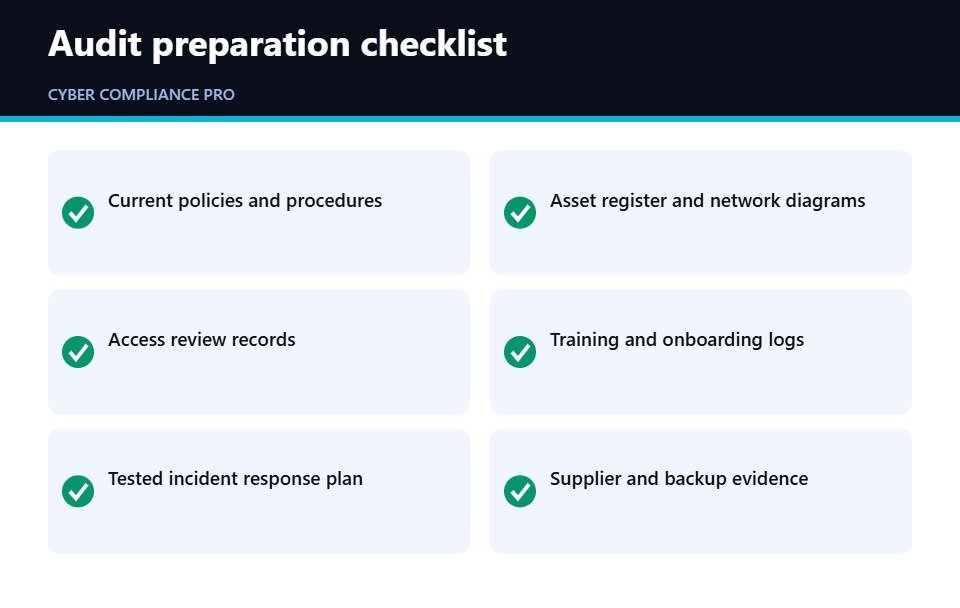
Preparation is mostly about evidence. Gather your current policies, asset register, network diagrams, access review records and training logs before the audit starts. Then compare them with the standard and fix obvious gaps.
The Essential Eight maturity model from the Australian Cyber Security Centre is a useful self-check for technical controls. Also confirm that your incident response plan exists and has been tested, since auditors almost always ask for it.
Brief your staff, too. People who understand why the audit is happening answer questions more clearly and are less likely to guess.
What Happens After the Audit
The report is only the starting point. Rank the findings by risk, assign owners and set dates. Quick fixes such as enforcing multi-factor authentication or removing old accounts can often be completed within weeks.
Larger items, such as building a tested response capability, need budgets and planning. Our cybersecurity compliance consulting team helps turn audit findings into a sequenced roadmap, and the guide on how to run a cyber compliance assessment shows the same method step by step. Repeat the audit on a regular cycle so improvements stay in place.
Want an independent cyber security audit and a prioritised fix list?
Get in TouchFrequently Asked Questions
It is a structured review that tests your security controls against a standard, regulation or policy and reports the gaps with evidence.
Most organisations run an internal audit at least yearly, plus external audits as certification, customers or regulators require.
A focused audit of a small or mid-sized organisation often takes a few weeks, including evidence collection and reporting.
No. A penetration test attacks systems to find technical weaknesses, while an audit also reviews governance, people, process and documentation.
An impartial reviewer. Internal teams can handle early checks, but an independent auditor adds objectivity for certification or customer assurance.