SOCI Act Risk Management Program: What You Must Do
The SOCI Act risk management program is a written program that some critical infrastructure owners must keep current. This guide explains who it applies to, the four hazards it covers, the cyber frameworks you can use and the annual board report.
Four Hazards, One Program
Cyber, personnel, supply chain, physical and natural.
Read SectionThe SOCI Act risk management program is a written program that certain owners and operators of critical infrastructure must keep under the Security of Critical Infrastructure Act 2018. In plain terms, it shows how you identify and reduce risks that could disrupt essential services. First, you need to confirm whether the rules apply to you.
This guide summarises the main requirements. It is general information, so confirm your obligations with your legal adviser and the regulator. For a wider view, our compliance roadmap for ISO 27001, ACSC ISM, RFFR and the SOCI Act shows how the frameworks overlap.
Who Needs a SOCI Act Risk Management Program
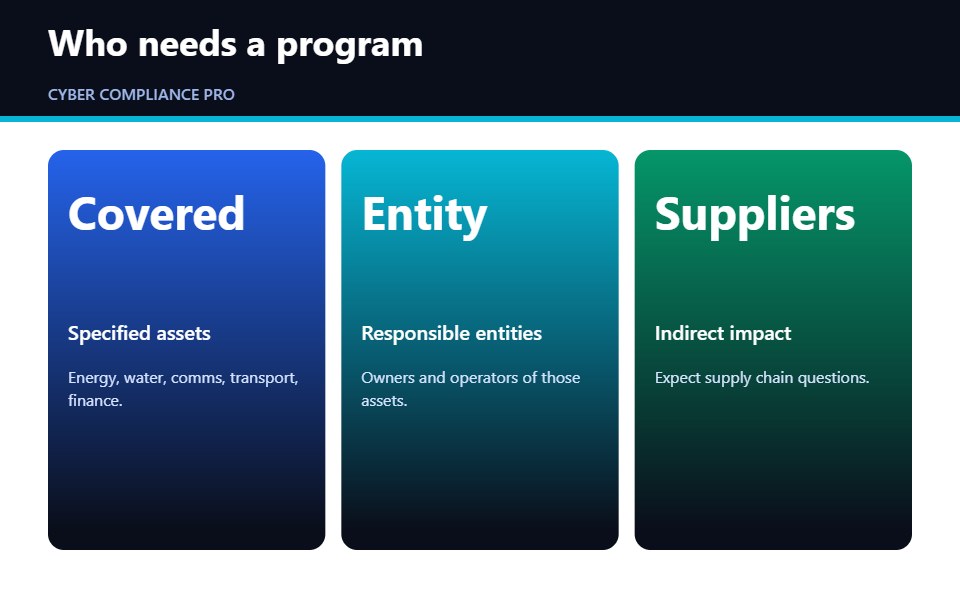
The obligation applies to the responsible entities of specified critical infrastructure assets, such as certain assets in energy, water, communications, transport and financial services. Not every business in those sectors is covered, because the rules depend on the type and size of the asset.
Check the definitions with the Cyber and Infrastructure Security Centre, which administers the regime. Also, if you supply a covered entity, expect to receive supply chain questions even if you are not covered yourself.
If you are unsure, ask the regulator early. A short conversation now is cheaper than a compliance gap later.
The Four Hazards a SOCI Act Risk Management Program Covers
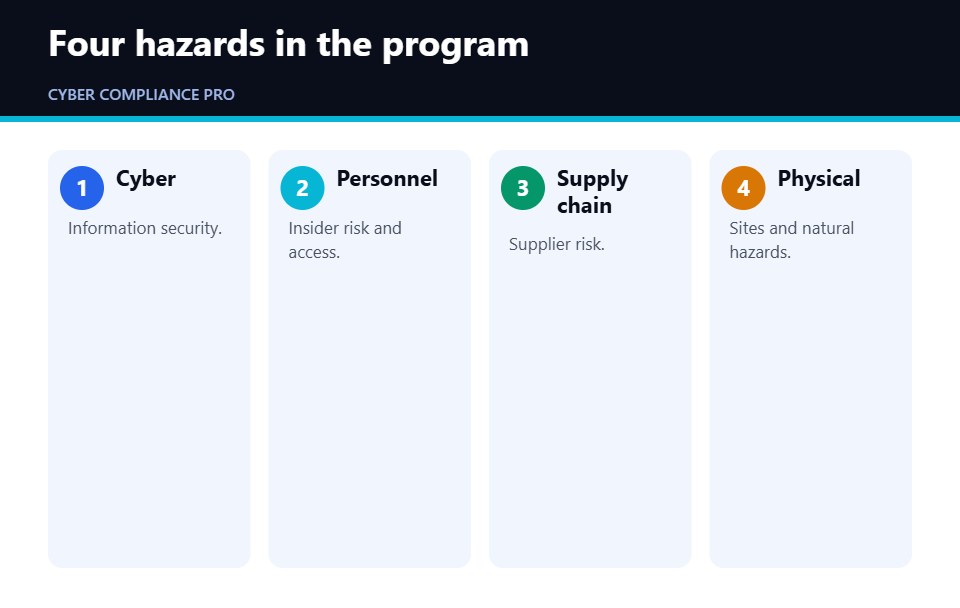
The program must be written, current and cover four hazard areas.
- Cyber and information security. Protect systems and data from attack and misuse.
- Personnel. Manage insider risk, screening and access.
- Supply chain. Understand and manage risks from suppliers and service providers.
- Physical and natural hazards. Plan for damage, loss of sites and severe weather.
For each hazard, identify the material risks, set controls to reduce them and review how well they work.
Because the hazards interact, test them together. For example, a supplier outage can create a physical risk, and an insider with excessive access can create a cyber one.
Unsure where you stand? Our cyber compliance assessment compares your controls with the frameworks the program accepts.
Cyber Frameworks the Program Accepts
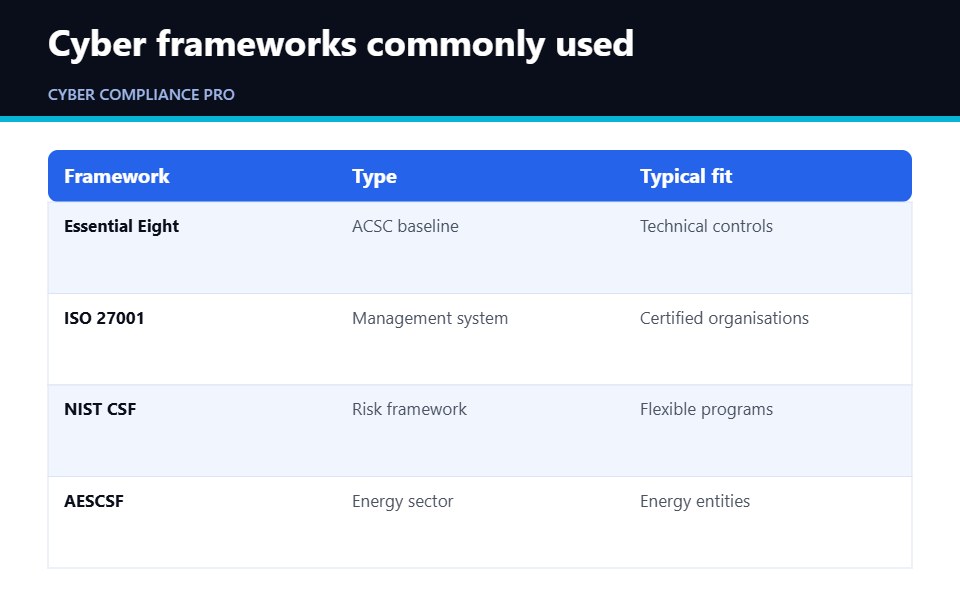
For the cyber hazard, the rules point to recognised frameworks. Entities can use the Essential Eight (at the maturity level the rules specify), ISO 27001, the NIST Cybersecurity Framework or, for energy, the Australian Energy Sector Cyber Security Framework. Check the current rules for the exact levels.
Because many organisations already hold ISO 27001, that route is common. Our guide to the ISO 27001 certification process shows what is involved, and our Essential Eight assessment covers the other route.
The Annual Report and Board Sign-Off
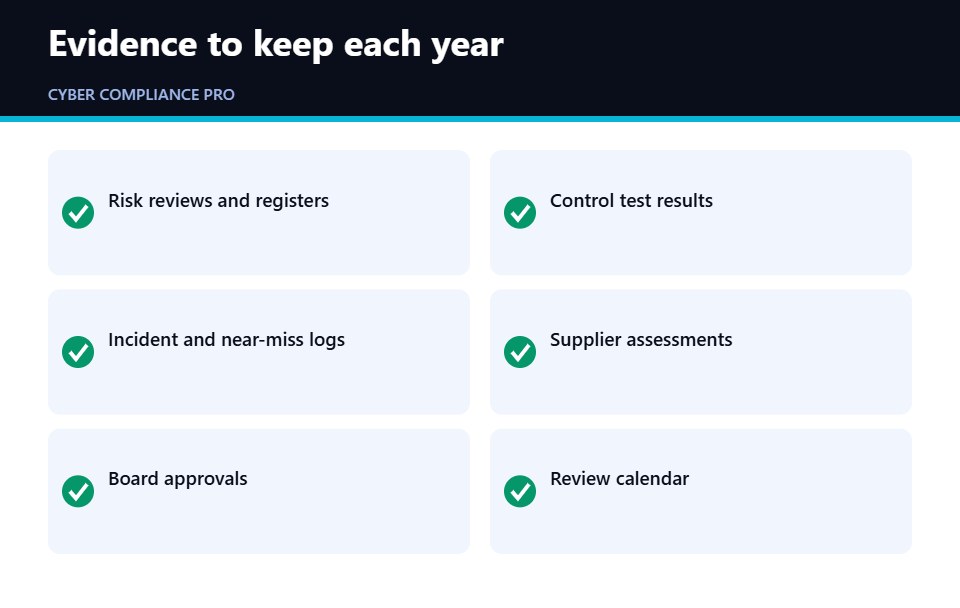
Each year, the entity must submit an annual report about the program. The responsible entity's board or governing body must approve it. Evidence matters, so keep records of risk reviews, control testing, incidents and decisions throughout the year.
Also, review the program whenever your assets, suppliers or threats change. A program that was accurate last year may have gaps today.
How to Start
Begin with scope. List your critical assets and confirm which ones the regime covers. Then run a gap check against the four hazards and your chosen cyber framework, and rank the fixes by risk.
Finally, assign owners, set a review calendar and brief leaders. If your organisation also follows cyber governance practices, you already have much of the oversight structure the board report needs.
Also, keep the program short enough to use. A clear document, with owners and review dates, is easier to defend than a long one nobody reads.
Need help building or reviewing your critical infrastructure risk program?
Get in TouchRelated resources
Evidence is the hard part of a risk management program. Keep each hazard recorded in a risk register, build the policy set from the security policy templates, and test the controls before the annual report using the internal audit checklist.
Frequently Asked Questions
The obligations attach to specific critical infrastructure assets and the entities responsible for them, not to business size. A small entity can be covered if it is responsible for a covered asset, and a large business with no covered asset is not. Check the Act's asset definitions and your sector rules, and get advice if you are unsure.
The Security of Critical Infrastructure Act 2018 is Australian law that sets security duties for owners and operators of critical infrastructure.
Responsible entities of specified critical infrastructure assets that the rules cover.
Cyber and information security, personnel, supply chain, and physical and natural hazards.
Recognised options include the Essential Eight, ISO 27001 and the NIST Cybersecurity Framework.
The responsible entity board or governing body approves it before submission.
One Response