Cybersecurity Compliance Consulting Cost in Australia
Cybersecurity compliance consulting cost depends on scope, and most providers will not quote a fixed price before they understand it. Here is what moves the number, how engagements are structured and which questions make quotes easy to compare.
What Moves the Price
The four factors that change the size of an engagement more than anything else.
Read SectionHow Work Is Packaged
Assessments, implementation support and ongoing advisory compared side by side.
Read SectionQuestions to Ask
A short list that turns vague proposals into comparable ones.
Read SectionCybersecurity compliance consulting cost is the first question most Australian leaders ask, and the honest answer is that it depends on scope. A 40-person firm preparing for its first ISO 27001 audit needs a very different engagement from a regulated financial group closing gaps against APRA CPS 234.
That does not mean pricing has to be a mystery. Once you know what drives fees, you can describe your needs clearly and judge proposals fairly. This guide covers the main cost drivers, the common engagement models and a practical way to compare providers.
What Drives Cybersecurity Compliance Consulting Cost
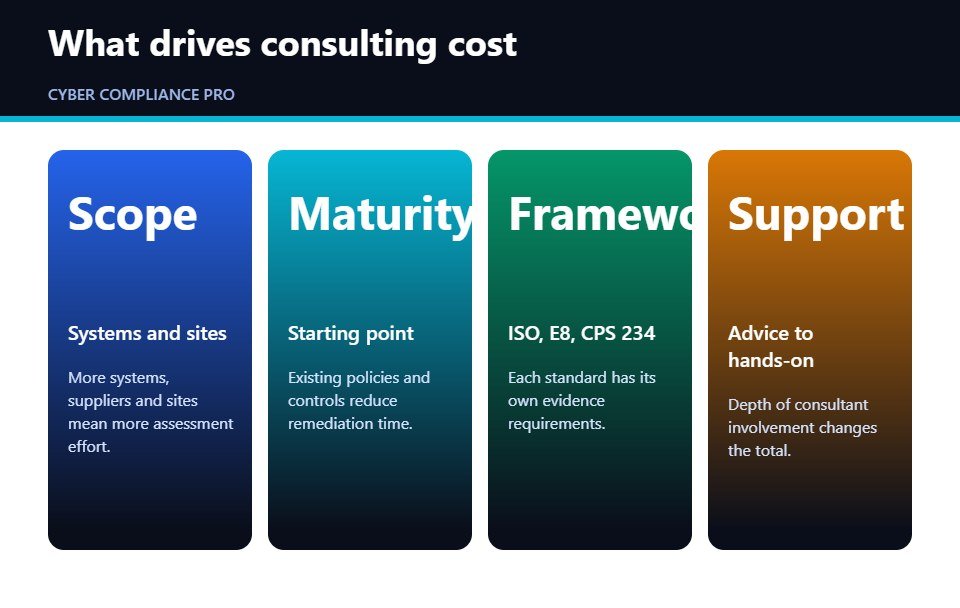
Four factors shape the size of almost every engagement. Understanding them first helps you ask for the right thing.
- Scope: The number of systems, sites, business units and suppliers included. A single cloud tenant is far quicker to assess than a hybrid estate with several offices.
- Starting maturity: Organisations with documented policies and working controls need less remediation than those starting from scratch.
- Framework and regulator: ISO 27001, the Essential Eight, APRA CPS 234 and the SOCI Act each carry their own evidence requirements, so effort differs.
- Depth of support: Advice only, hands-on implementation and ongoing governance sit at very different levels of consultant time.
Timing also matters. Work that has to meet a hard audit or tender deadline usually needs more people at once, which raises the total.
Common Engagement Models and How They Are Priced
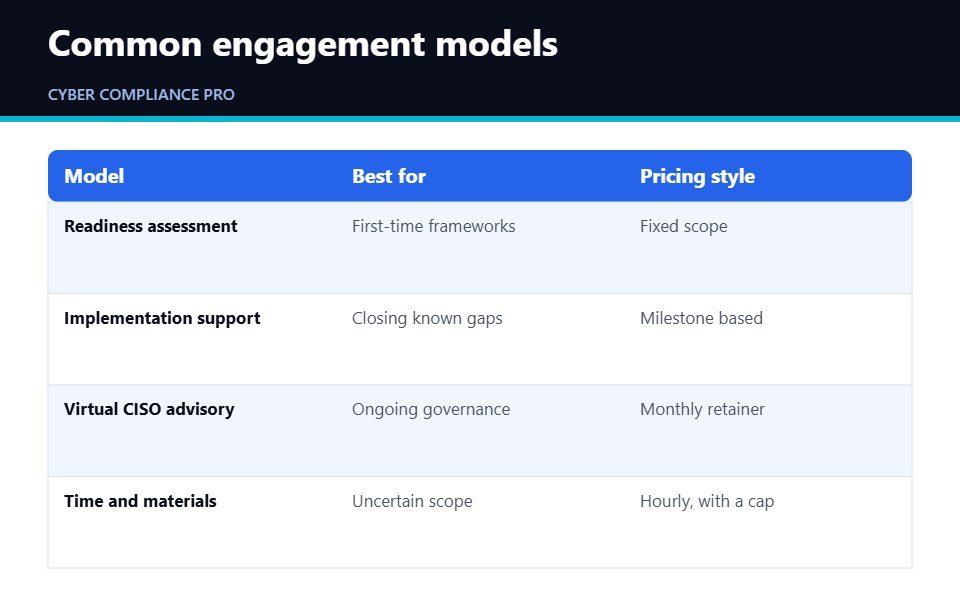
Providers tend to package work in three ways. Each suits a different stage of your program.
A readiness assessment is usually a fixed-scope piece of work with a set deliverable, such as a gap report and a prioritised roadmap. Implementation support is often scoped by milestone, because the effort depends on how many controls need to be built or evidenced. Ongoing advisory, sometimes called a virtual CISO service, is typically a monthly retainer for a set number of hours.
Whichever model you choose, cybersecurity compliance consulting cost should be tied to named deliverables. Fixed-scope work gives you cost certainty. Retainers give you flexibility. Time-and-materials arrangements can suit uncertain projects, but they need a clear cap and regular reporting so the bill does not drift.
What a Typical Engagement Includes
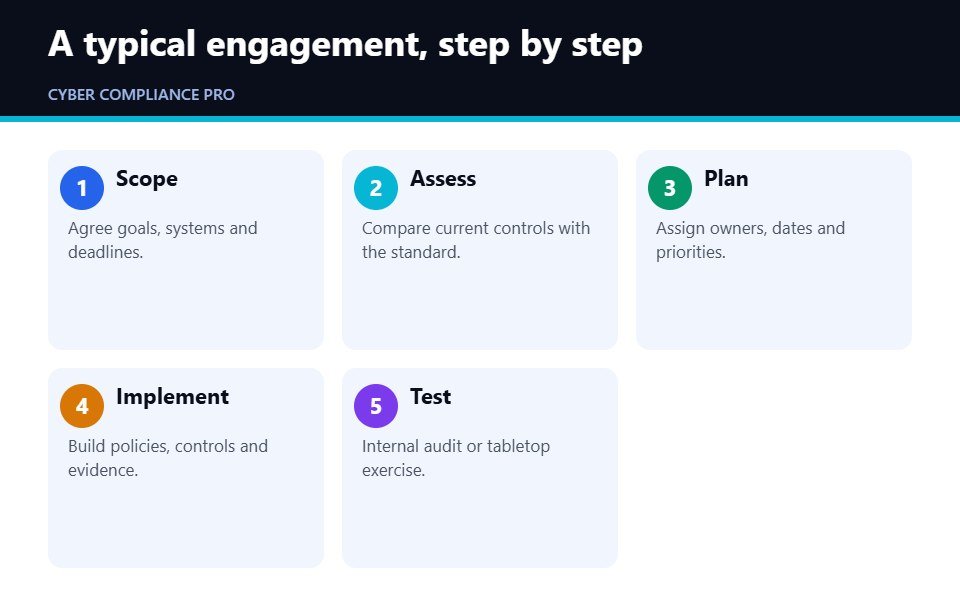
Most programs follow the same sequence, regardless of framework. First comes scoping, where goals, systems and deadlines are agreed. Then a gap assessment compares your current controls with the chosen standard.
After that, a sequenced plan assigns owners and dates. Implementation follows, covering policies, technical controls and evidence collection. Finally, internal testing, such as an internal audit or a tabletop exercise, confirms the work holds up before an external auditor arrives.
If you only need part of this, say so early. A focused request, such as help applying our internal audit checklist for ISO 27001, costs far less than a full program.
Not sure how big your scope really is? A cyber compliance assessment gives you a defined baseline, which makes every later quote more accurate.
How to Compare Quotes From Providers
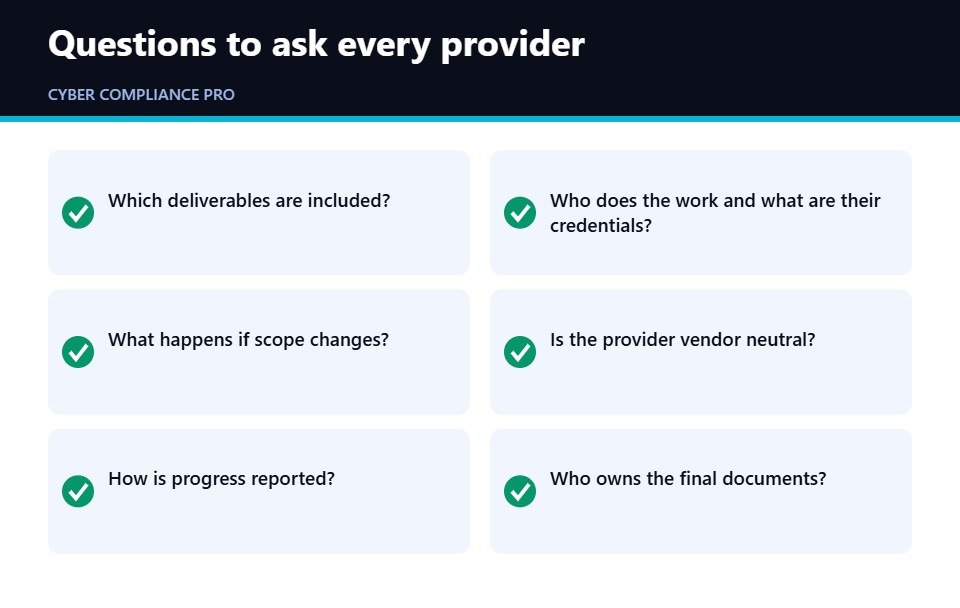
Cybersecurity compliance consulting cost can look identical on paper while covering very different work. Two proposals with the same headline price can hide very different work. Ask each provider the same short list of questions so you compare like with like.
- Which deliverables are included, and in what format?
- Who will do the work, and what are their qualifications?
- What is assumed about scope, and what happens if it changes?
- Is the provider independent of any product it recommends?
- How is progress reported, and who owns the final documents?
The Australian Cyber Security Centre publishes free guidance on the Essential Eight maturity model, which is a useful reference when judging whether a proposal covers the right controls.
Ways to Keep the Cost Under Control
You have more influence over cybersecurity compliance consulting cost than it may seem. Define the scope tightly before asking for quotes, and gather existing policies and diagrams in advance so consultants do not spend billable hours hunting for them.
It also helps to phase the work. Start with an assessment, then fund implementation in stages based on risk. That keeps early spending low and shows the board real progress.
Our cybersecurity compliance consulting team scopes every engagement in writing first, so you know what is included before work begins. You can also see how the process fits together on our services page.
Want a clear scope and quote for your compliance program?
Get in TouchFrequently Asked Questions
It varies with scope, starting maturity and the framework involved. A fixed-scope assessment costs far less than a full implementation program, so most providers quote only after a short scoping conversation.
Fixed prices suit defined projects such as a gap assessment. Retainers suit ongoing governance work where needs change month to month.
Yes. Many teams handle evidence collection and policy approval internally while consultants guide scope, design and testing.
A readiness assessment often takes a few weeks. Implementation for a first certification commonly runs several months, depending on how many gaps need closing.
It is the most efficient starting point, because it replaces assumptions with a clear list of gaps and makes later quotes more accurate.